Words and photos by Noah Epps
Published by Montana Kaimin, 2025
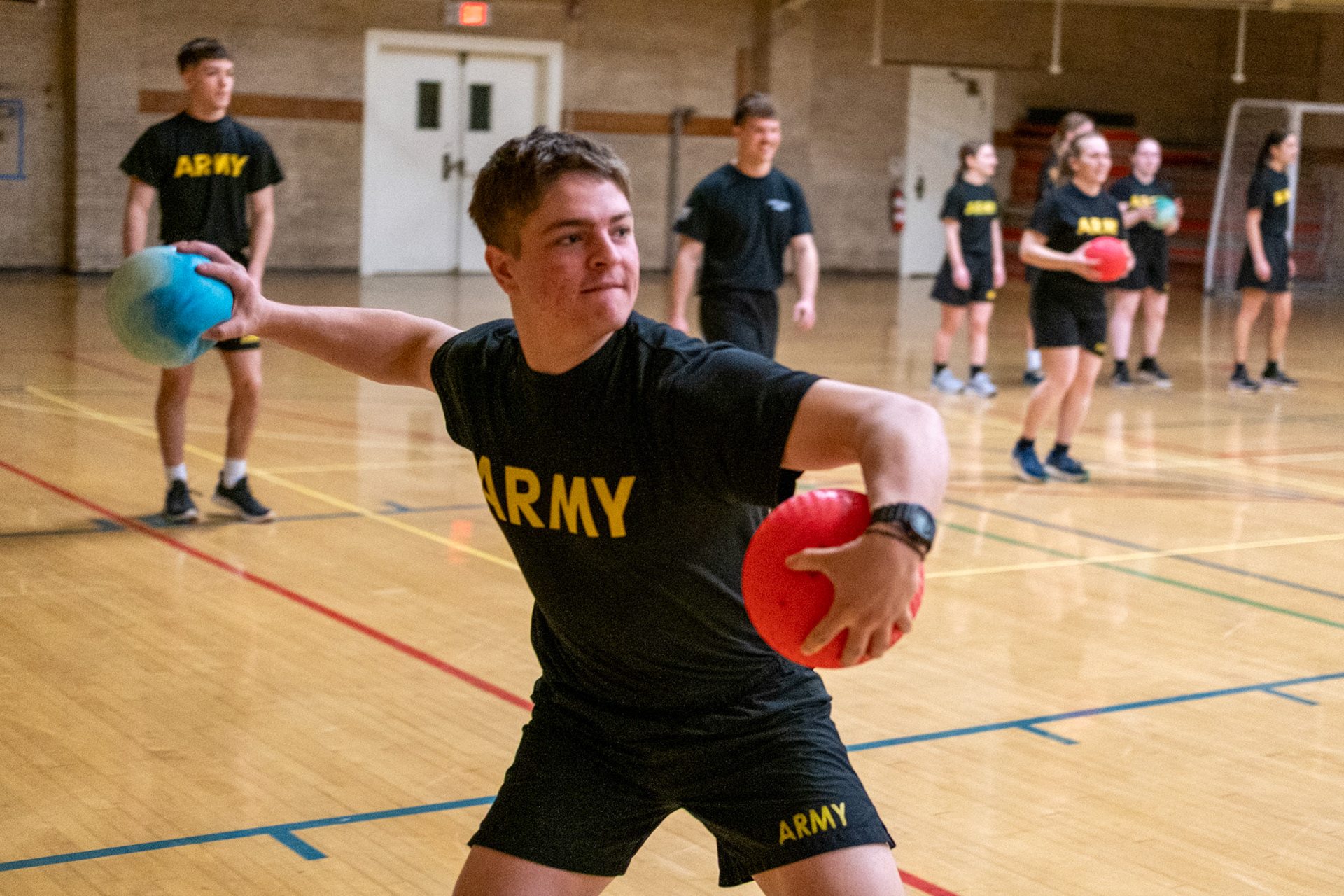
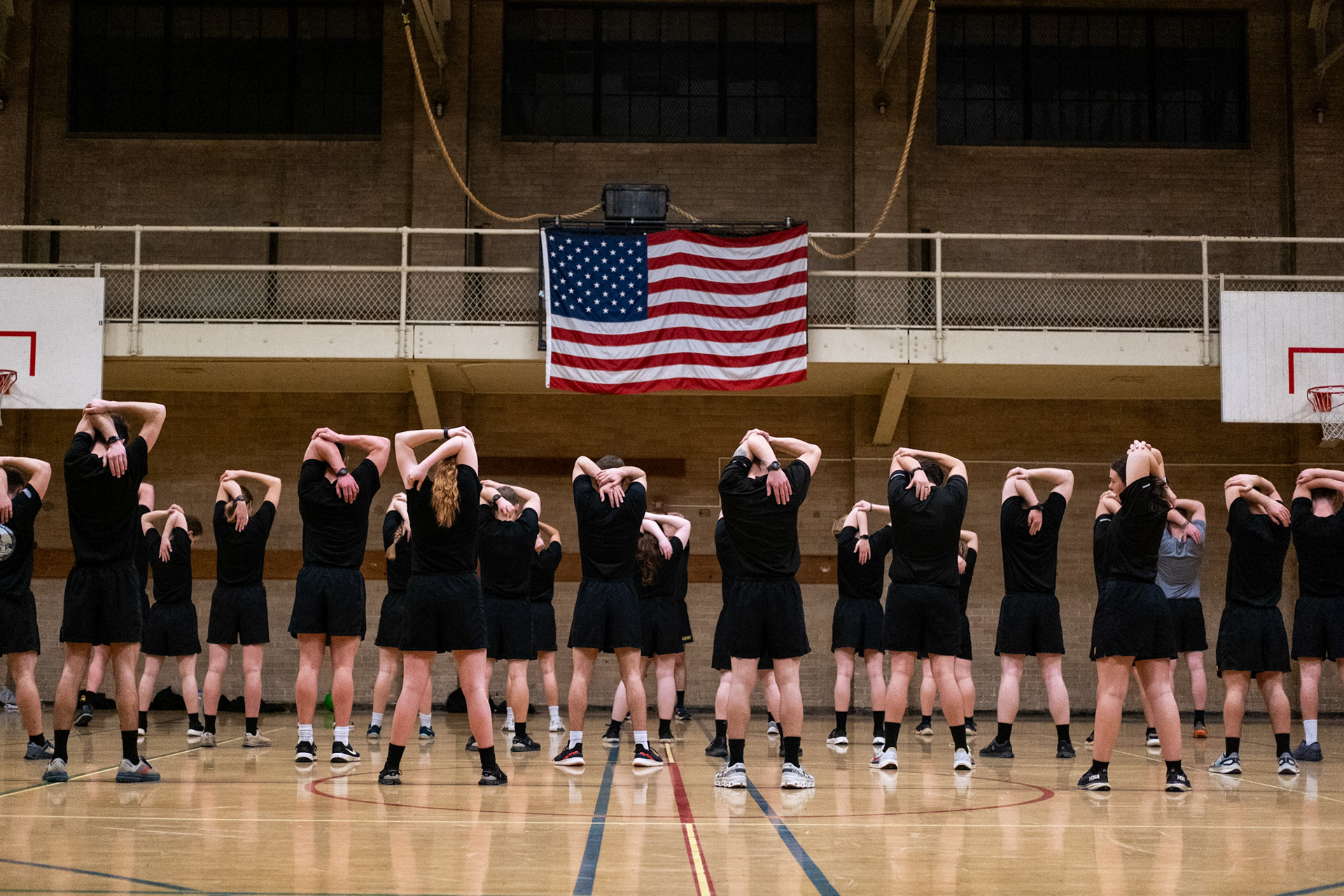
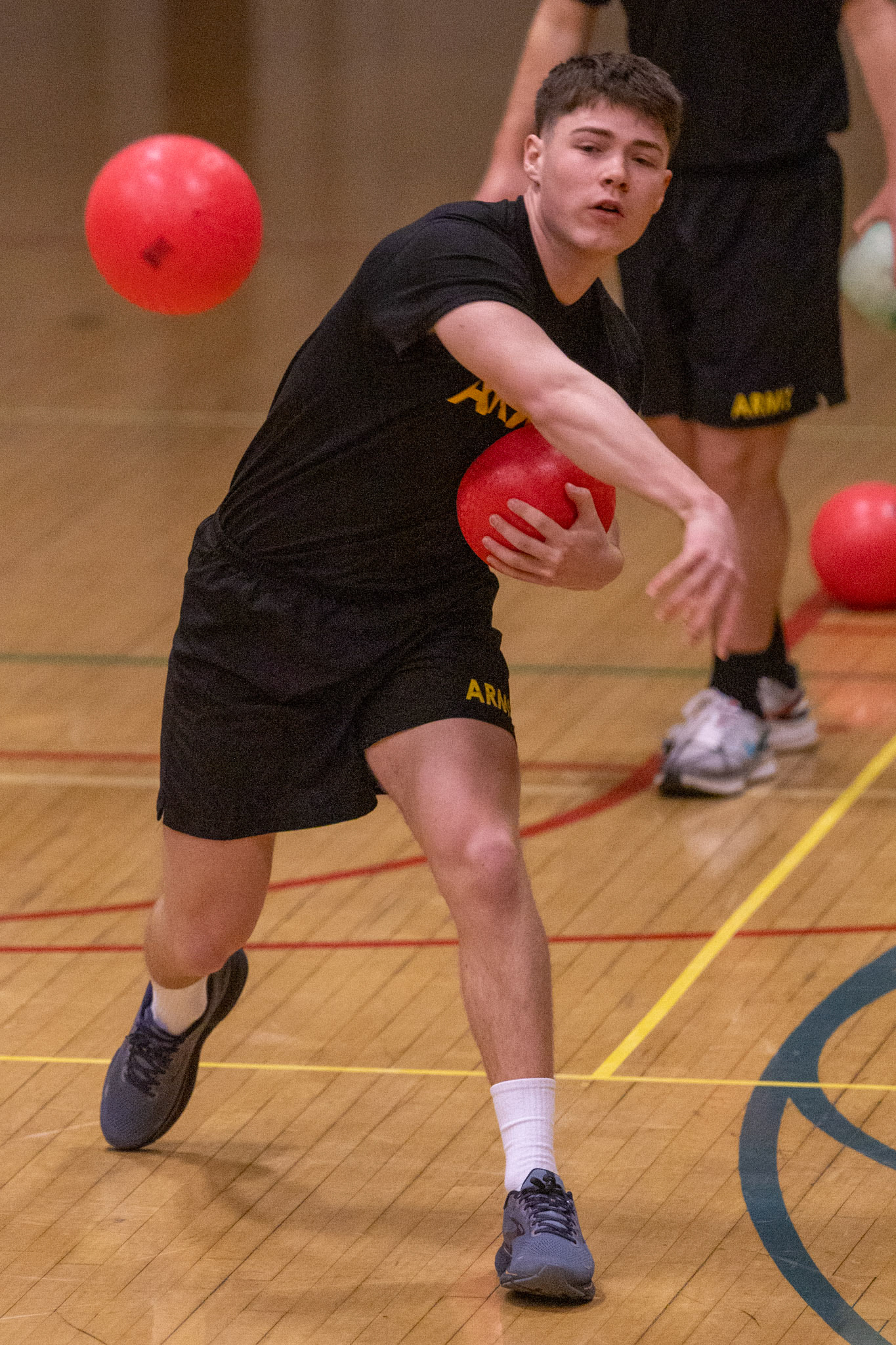
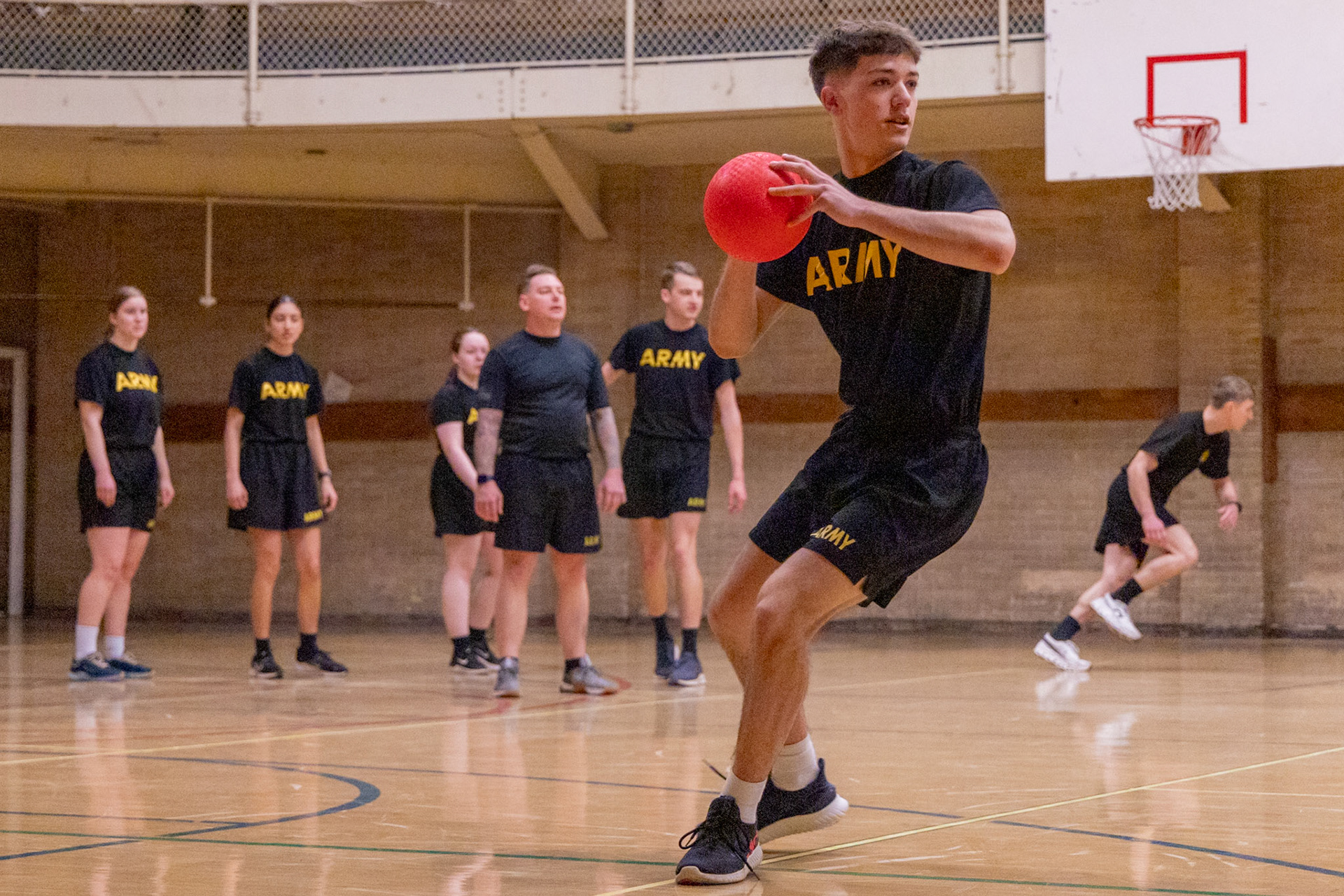
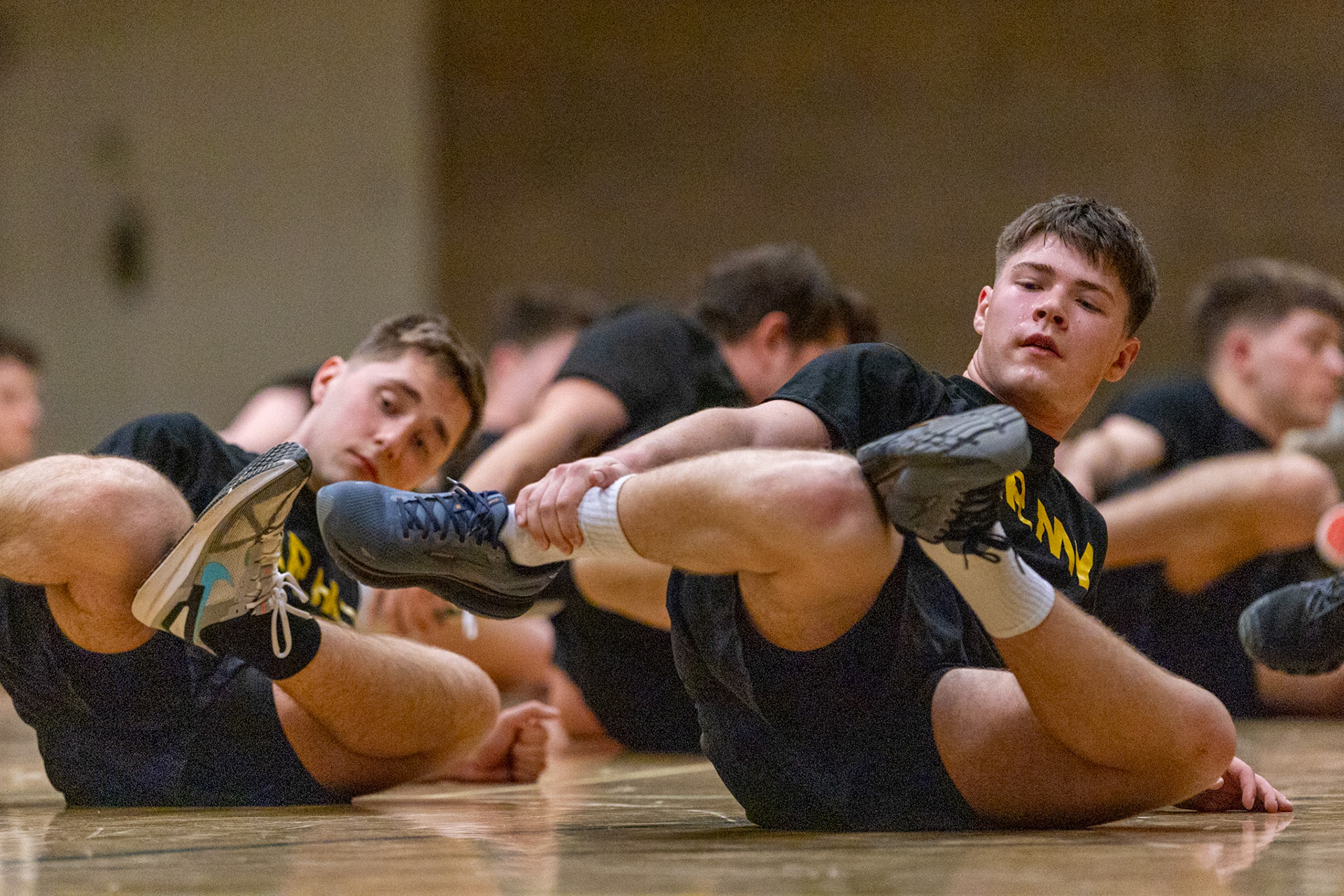
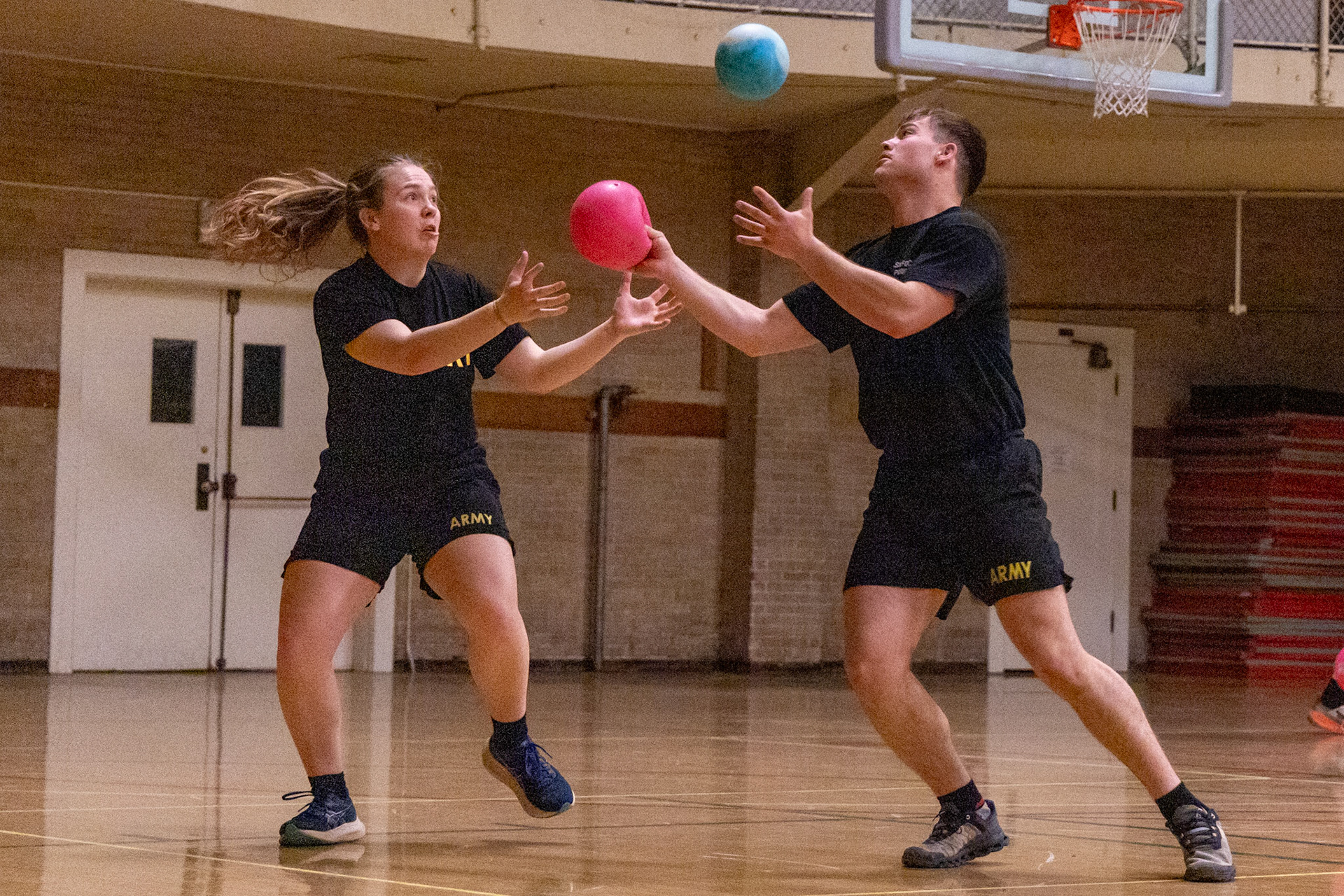
Before the morning sunlight had even begun to creep over Mount Sentinel, members of the University of Montana’s Reserve Officers’ Training Corps filed silently into Schreiber Gym. The early start is nothing new to the cadets, as morning physical training is just another part of the program. Most days, their training prepares them for the strain of prospective combat, but this morning they had a different objective: Dodgeball.
The cadets were given a rare morning of fun before spring break as they had completed their combat fitness test earlier in the week.
Shortly after 6 a.m., the cadets fell into formation with their platoons, all facing the flag. As they began to recite the soldier’s creed, a statement of commitment to their duties, the collection of tired students became warriors. Despite the fun that lay ahead, this morning’s traditions were no different from any other.
ROTC is a program offered at more than 1,700 universities and colleges across the country that prepares students for service as military officers following graduation. ROTC at UM is specifically associated with the Army.
While the military has many professional benefits for students, such as a stable career path and financial assistance with school, some students are drawn to the program for more personal reasons.
“It teaches you discipline [and] it keeps you physically fit,” said Noah Findlay McDougall, a junior who directs the group’s two platoons as the first sergeant.
McDougall also appreciates the community of ROTC, an aspect that was on full display as the cadets laughed and hurled dodgeballs at each other.
“I was kinda worried when I first joined that it would be like a little clicky and stuff, but everyone here is friends,” Findlay McDougall said.
For freshman Sofia Ferraro, days of play are still an important part of ROTC training because it helps the group grow as a team.
“We work out together, we do hard things together, and then when we do good at those hard things, we get to do fun things and still learn from each other and build cohesion,” Ferraro said.
Ferraro doesn’t come from a military family, but felt compelled to join the military to be a part of something bigger than herself. Ferraro said she appreciates ROTC because of the overwhelming support she received despite her limited background before entering the program.
“I didn't know what I was doing, and coming into it, people, they took you in, they didn't care what you knew, and it feels like a family,” Ferraro said.